If not for —
tell me, what would this land look like?
Would your daughter hold a book,
or a broom she never chose?
Would her voice rise in a classroom,
or be buried in kitchen smoke?
Would the well still deny shadows,
would footsteps still be measured—
who can walk, who must crawl,
who must not exist at all?
If not for him—
laws would still wear chains,
justice would still have caste,
freedom would be a word
locked in someone else’s house.
He carved rights out of stone hearts,
wrote dignity into a system
that never meant to include us.
He didn’t beg—he demanded.
Didn’t bow—he rewrote the rules.
And yet—
what he dreamt… remains unfinished.
He wanted minds unchained,
not just bodies allowed to move.
He wanted equality felt in streets,
not just printed in books.
He wanted annihilation of caste—
not its polite disguise.
But look around—
has the poison dried?
Or has it only changed its language?
Today it doesn’t always shout—
it whispers.
In surnames.
In marriages.
In rented houses denied quietly.
In friendships filtered without reason.
In opportunities that disappear
before they are even seen.
Discrimination has learned silence—
but it has not disappeared.
People still hold on to caste
like an invisible inheritance,
passing it down without question,
protecting it without shame.
Society still runs on these quiet divisions,
unspoken, unchallenged—
as if injustice becomes acceptable
when it lowers its voice.
So what now?
Will you sit and watch
while inequality adapts and survives?
Or will you rise—
not in noise, but in conviction?
This is not memory.
This is responsibility.
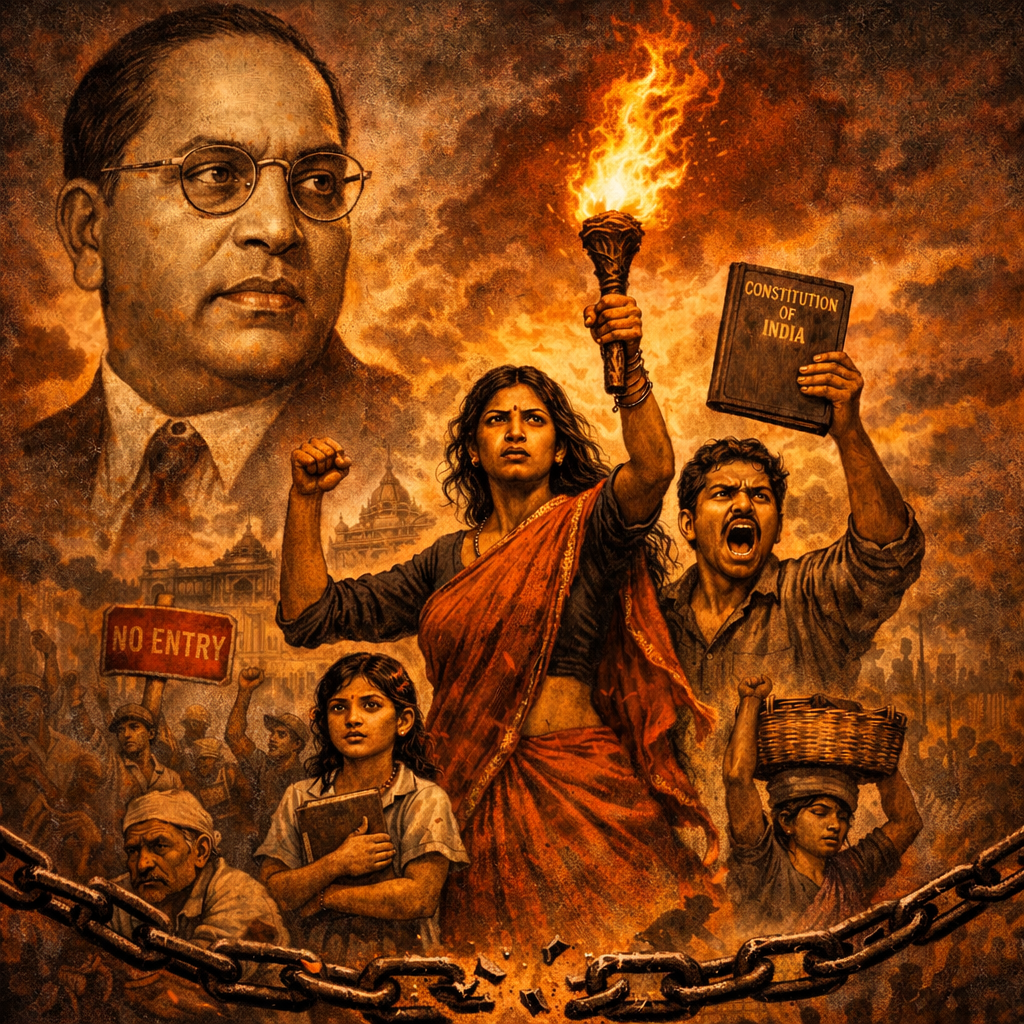
Not a statue to garland—
a fire to carry.
He broke the first wall.
The rest?
They stand waiting for your hands.
So don’t whisper his name—
roar it.
Don’t celebrate—continue.
Don’t remember—become.
Because if you stay still,
history will not forgive—
and neither will those
who never got the chance to stand.
Will You?